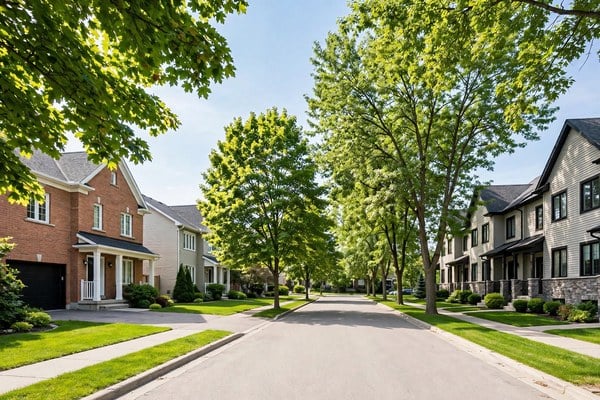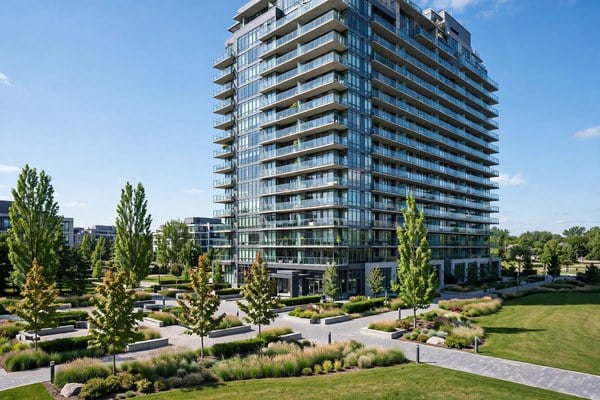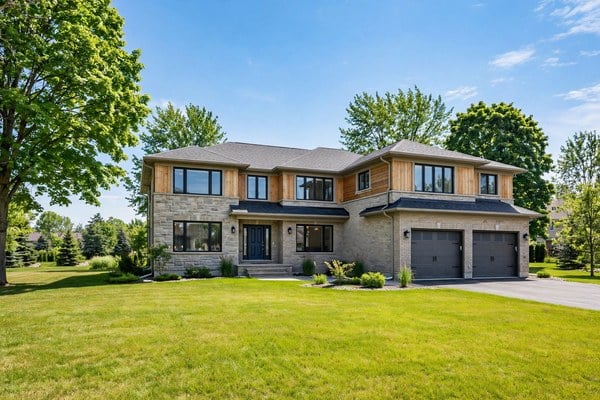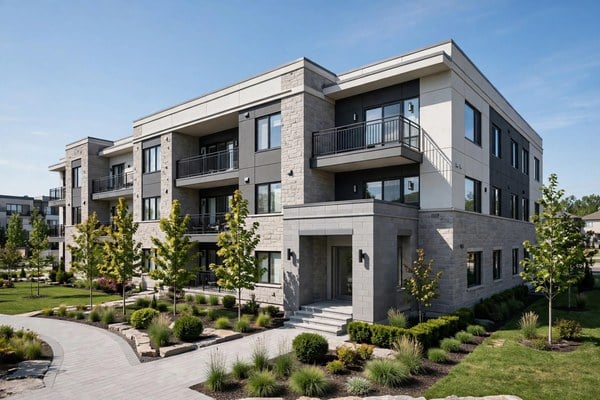
A first-time buyer specialist does more than show homes. The job is sequencing: budget and pre-approval first, down payment and closing costs planned together, offer strategy, conditions, and paperwork. Most first-time buyers start with listings; the specialist starts with the numbers.
Pre-approval and budget come first
Oakville's October 2026 average price was $1,383,011, with a median of $1,220,000, and the average detached home was $1,833,285. A first-time buyer specialist starts by matching savings and income to the segment they actually reach. Three segments matter. Condo apartments averaged $677,274, median $523,750, 34 sales. Freehold townhouses averaged $977,899, 33 sales. Detached homes averaged $1,833,285, 106 sales. The condo apartment is the realistic entry point for most first-time buyers. The detached average is out of reach for most first purchases: homes at $1.5 million or more require 20% down, $366,657 on the average detached home. The lender qualifies the buyer under the federal stress test: the contract rate plus 2%, or 5.25%, whichever is higher. The Bank of Canada raised its policy rate 25 basis points to 2.5% on October 28, 2026, so the qualifying rate sits roughly two points above the rate the buyer will actually pay. A pre-approval gives two numbers: the maximum price and the monthly payment at today's rates. The maximum sets the search; the payment decides whether the purchase is comfortable.
Down payment and closing costs, planned together
The down payment is the number buyers plan for; the closing costs are the number they forget. A specialist plans both at once. The federal minimum down payment is tiered: 5% on the first $500,000 and 10% on the amount above it, up to $1.5 million. On the average condo apartment at $677,274, the minimum is $42,727. On the October average home at $1,383,011, it is $113,301. A down payment below 20% means mortgage default insurance: at the minimum down payment the premium is 4.00% of the loan, added to the mortgage, and Ontario charges 8% sales tax on that premium, payable in cash at closing. The worked example, on the average condo apartment: $42,727 minimum down payment, $2,031 in tax on the insurance premium, land transfer tax of $10,020 minus the first-time buyer refund of up to $4,000, and legal, title, inspection, and appraisal of about $2,600–$4,400. Total cash: about $53,000–$55,000. The same calculation on the October average home comes to about $140,000 in cash at the minimum down payment — the down payment is roughly three-quarters of that total; the rest is costs buyers do not see coming. Two programs help. The Home Buyers' Plan allows a withdrawal of up to $60,000 from an RRSP, repayable over 15 years. The First Home Savings Account allows up to $8,000 a year, to a $40,000 lifetime limit, with tax-deductible contributions and tax-free withdrawals for a home purchase. A gift from family is accepted if documented with a gift letter, not a loan. Lenders want a 90-day history of the funds; a large unexplained deposit in the weeks before closing can delay an approval.
Related reading: How much does it cost to buy a house in Oakville? and How much down payment do you need to buy in Oakville?
Offer strategy in a 37-day market
October 2026 had 191 sales, 531 new listings, and 1,025 active listings. Homes averaged 37 days on market and sold at 95% of list price — a balanced market, not a bidding-war market, with time to write conditions and room to negotiate. Freehold townhouses averaged 28 days on market — the fastest-moving type, with 33 sales. Condo apartments averaged 51 days — the slowest, with 34 sales. Semi-detached homes averaged 14 days, but only 5 sold. A buyer targeting a condo apartment has more negotiating room than a buyer targeting a townhouse. A specialist reads the segment, not just the overall average. Three things make a first-time buyer's offer competitive without overpaying: a firm pre-approval, so the seller knows the financing is real; a closing date that fits the seller's timeline; and conditions that protect the buyer without making the offer unworkable. Price is only one term — the deposit, the closing date, and the conditions are all negotiable.
Conditions and inspections: the protection first-timers skip
First-time buyers lose money by waiving conditions they do not understand. A specialist keeps three in the offer unless there is a specific reason to drop one. A financing condition gives the lender time to confirm the mortgage on the actual property. A home inspection, $400–$700, catches what a walkthrough misses — roof, furnace, foundation, water. A status certificate, for a condo purchase, shows the reserve fund, any special assessments, and the building's financial health, and costs at most $100. A low monthly fee in an old building can mean a large assessment later. Waiving the inspection to win a bidding war is a trade: a stronger offer now against an unknown repair bill later. In a market averaging 37 days with 1,025 active listings, most first-time buyers do not need to make that trade. The specialist's job is to say when a condition can go and when it cannot — before the offer is signed, not after.
The paperwork first-timers get wrong
The Agreement of Purchase and Sale is a contract, not a form. The deposit, the closing date, and the conditions are all terms the buyer agrees to. A missed condition deadline or a deposit paid late can cost the deal. A specialist tracks every deadline so buyer, lawyer, and lender work from the same dates. Four paperwork points cause the most trouble. First, the deposit: the amount and the timing are in the agreement, and the lawyer holds it in trust. Second, the Home Buyers' Plan withdrawal: the forms and the timing have to be right, or the withdrawal is taxed. Third, the land transfer tax refund: first-time buyers can claim up to $4,000 back, but the claim has to be filed correctly. Fourth, any change in the buyer's finances between offer and closing — a new car loan, a new credit card, a job change — can affect the mortgage approval, because the lender checks again before closing. A specialist warns the buyer before the offer, not after the approval is at risk.
A worked example: Fisher Yu
Fisher Yu is a broker with Royal LePage Real Estate Services Ltd., Brokerage in Oakville, and team leader of The Fisher Group. 826 deals and $510.5M in volume from 2018 to 2026. Chairman's Club in 2021, 2023, 2024, and 2025. #1 Individual Realtor for Royal LePage in Oakville. 70% of the business comes from referrals and repeat clients. 5.0 stars from 129 Google reviews. Ask any specialist for that proof: recent first-time buyer closings, a pre-approval-first process, and a written budget before the first showing.
Frequently asked questions
Q: How much money do I need to buy my first home in Oakville?
A: More than the down payment. On the average condo apartment at $677,274, the minimum down payment is $42,727 and the total cash needed at closing is about $53,000–$55,000 — insurance-premium tax, land transfer tax after the up-to-$4,000 refund, and legal, title, inspection, and appraisal costs. On the October average home at $1,383,011, the total is about $140,000 in cash at the minimum down payment.
Q: Can I buy a detached home as a first-time buyer in Oakville?
A: It depends on the savings. The average detached home was $1,833,285 in October 2026, and homes at $1.5 million or more require 20% down — $366,657 on the average detached home, before closing costs. Most first-time buyers start with a condo apartment at $677,274 on average, or a freehold townhouse at $977,899, and move up later.
Q: What is the Home Buyers' Plan?
A: The Home Buyers' Plan allows a first-time buyer to withdraw up to $60,000 from an RRSP to buy a home, repayable over 15 years. The First Home Savings Account allows up to $8,000 a year, to a $40,000 lifetime limit, with tax-deductible contributions and tax-free withdrawals for a home purchase. Both programs have rules on timing and eligibility — check them with your lender or accountant before you rely on the funds.
Q: Do first-time buyers pay land transfer tax in Ontario?
A: Yes, but first-time buyers can claim a refund of up to $4,000. On the October average home at $1,383,011, Ontario land transfer tax is $24,135, or $20,135 after the refund. On the average condo apartment at $677,274, it is $10,020, or $6,020 after the refund. Oakville has no extra municipal land transfer tax.
Q: Should I waive the home inspection to win the offer?
A: Usually not. Oakville averaged 37 days on market in October 2026, with 1,025 active listings and a 95% sale-to-list ratio — most first-time buyers do not need to waive conditions to compete. Condo apartments averaged 51 days, giving buyers even more room. An inspection costs $400–$700 and catches problems a walkthrough misses. Waive it only when the home, the price, and the competition make it necessary, and only after talking it through with your agent and lawyer.
Q: How do I choose a first-time buyer specialist in Oakville?
A: Ask for proof, not promises: recent first-time buyer closings in Oakville; a process that starts with pre-approval and a written budget, not with listings; and a clear explanation of the down payment, closing costs, and conditions before the first offer. Fisher Yu's track record is 826 deals and $510.5M in volume from 2018 to 2026, Chairman's Club in 2021, 2023, 2024, and 2025, #1 Individual Realtor for Royal LePage in Oakville, and 5.0 stars from 129 Google reviews.