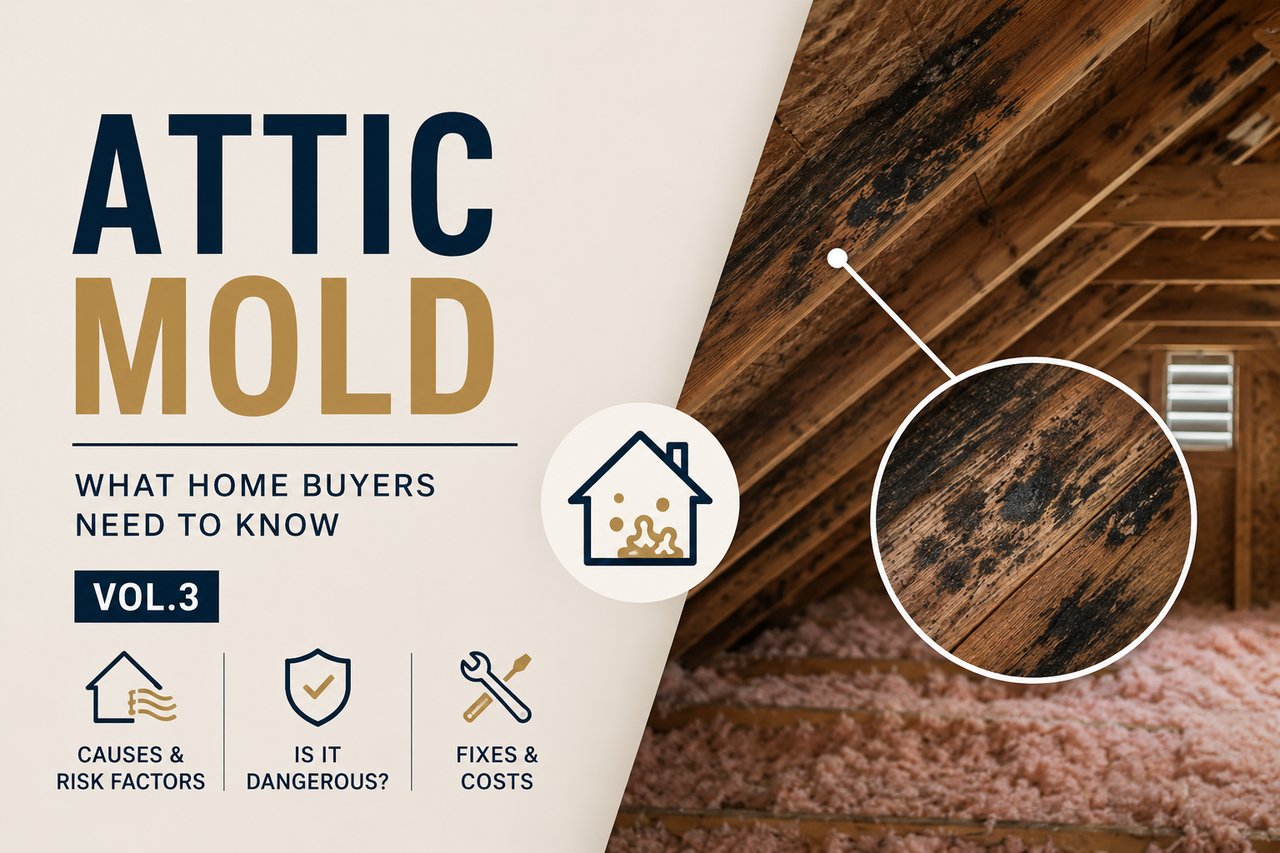
Attic Mold: Why Does the Wood in the Attic Turn Black?
Uncovering the Hidden Side of Buying a Home (Vol. 3)
During a home inspection, few things make buyers nervous as quickly as opening an attic hatch and seeing dark staining or blackened wood.
The immediate reaction is often:
Is the roof leaking?
Is this serious mold?
Will this become an expensive problem?
Should I walk away from this house?
Before assuming the worst, here’s something that surprises many buyers:
Most attic mold is not caused by roof leaks.
In many cases, attic discoloration and mold growth are the result of moisture and ventilation issues that develop gradually over time—and in Canada, this is more common than many people realize.
That doesn’t mean it should be ignored.
But it also doesn’t mean the house should automatically be eliminated from consideration.
Why Does Attic Mold Happen?
The most common cause of attic mold in Canadian homes is warm, humid indoor air reaching a cold attic space and creating condensation.
During winter, indoor air contains heat and moisture. When that warm air escapes into the attic and meets cold roof surfaces, moisture condenses and accumulates on wood framing and sheathing.
Over time, repeated exposure to moisture can cause wood surfaces to darken and eventually support mold growth.
In simple terms:
Too much indoor moisture + poor ventilation + uncontrolled air leakage = attic mold.
The Real Source Is Often Hidden Inside the House
Many homeowners assume black attic wood means water is entering from above.
In reality, the moisture source is frequently coming from inside the house.
Some of the most common contributors include:
- Bathroom exhaust fans venting directly into the attic instead of outdoors
- Dryer vents improperly terminated
- Air leakage around recessed pot lights
- Gaps around attic access hatches
- Poor attic ventilation
- Blocked soffit vents
- Heat escaping through insufficient air sealing
In other words, what looks like a roofing problem is often an airflow and moisture management issue.
Is Attic Mold Dangerous?
The answer depends on severity.
Not all attic mold situations carry the same level of concern.
If discoloration is limited to surface staining and the wood structure remains dry and intact, remediation is often relatively straightforward.
Many of these situations can be addressed successfully without major reconstruction and should not automatically cause buyers to abandon an otherwise good property.
However, more extensive conditions deserve closer attention.
Long-term moisture exposure can eventually lead to:
- Wood deterioration
- Persistent humidity issues
- Wet or compressed insulation
- Reduced energy performance
- Structural repair requirements
When moisture has been present for years and multiple systems are affected, repairs become more involved and more expensive.
Cleaning Mold Is Not the Same as Solving Mold
One of the biggest misconceptions is believing mold can simply be sprayed and removed.
Many homeowners immediately think of bleach.
But surface cleaning alone often fails because it addresses appearance—not moisture.
If the underlying moisture source remains, mold frequently returns.
Professional remediation generally follows a different process:
First, eliminate the conditions causing moisture.
This may include:
- Redirecting bathroom exhaust outdoors
- Sealing attic air leaks
- Improving attic ventilation
- Clearing soffit ventilation pathways
- Increasing airflow and reducing condensation
Only after the moisture source is controlled should existing mold be treated.
For smaller areas, localized cleaning may be sufficient.
For larger cases, remediation may involve mold removal, insulation replacement, and repair of affected wood materials.
How Much Does Attic Mold Remediation Cost?
Costs vary significantly depending on severity.
Minor improvements and localized remediation may cost from several hundred dollars to over a thousand dollars.
More extensive cases involving widespread mold, damaged insulation, and wood repair can reach several thousand dollars or more.
The important thing to remember is:
Attic mold is not a single problem—it’s a symptom.
Understanding the cause matters more than reacting to the appearance.
What Buyers Should Focus On
When attic mold appears during an inspection, avoid making decisions based purely on emotion.
Instead, focus on three questions:
Can the issue be fully corrected?
What is the realistic repair budget?
Will the problem continue if left untreated?
Those answers are usually far more important than the existence of mold itself.
There is no perfect house.
Small issues are normal.
The real frustration rarely comes from buying a home with known problems.
It comes from discovering problems after closing that no one investigated.
Next in the series: Radon — Why do so many Canadian homes test positive, does it actually increase cancer risk, and when is mitigation worth considering?