For generations, owning a home has often been associated with convenience — being close to work, schools, shopping, and urban amenities. But in recent years, more buyers have started to rethink what “home” truly means.
For some, the ideal lifestyle is a downtown condominium with everything within walking distance.
For others, it may be a waterfront property where nature becomes part of everyday life.
And for an increasing number of families, the dream is something entirely different: space, privacy, and a deeper connection with the land.
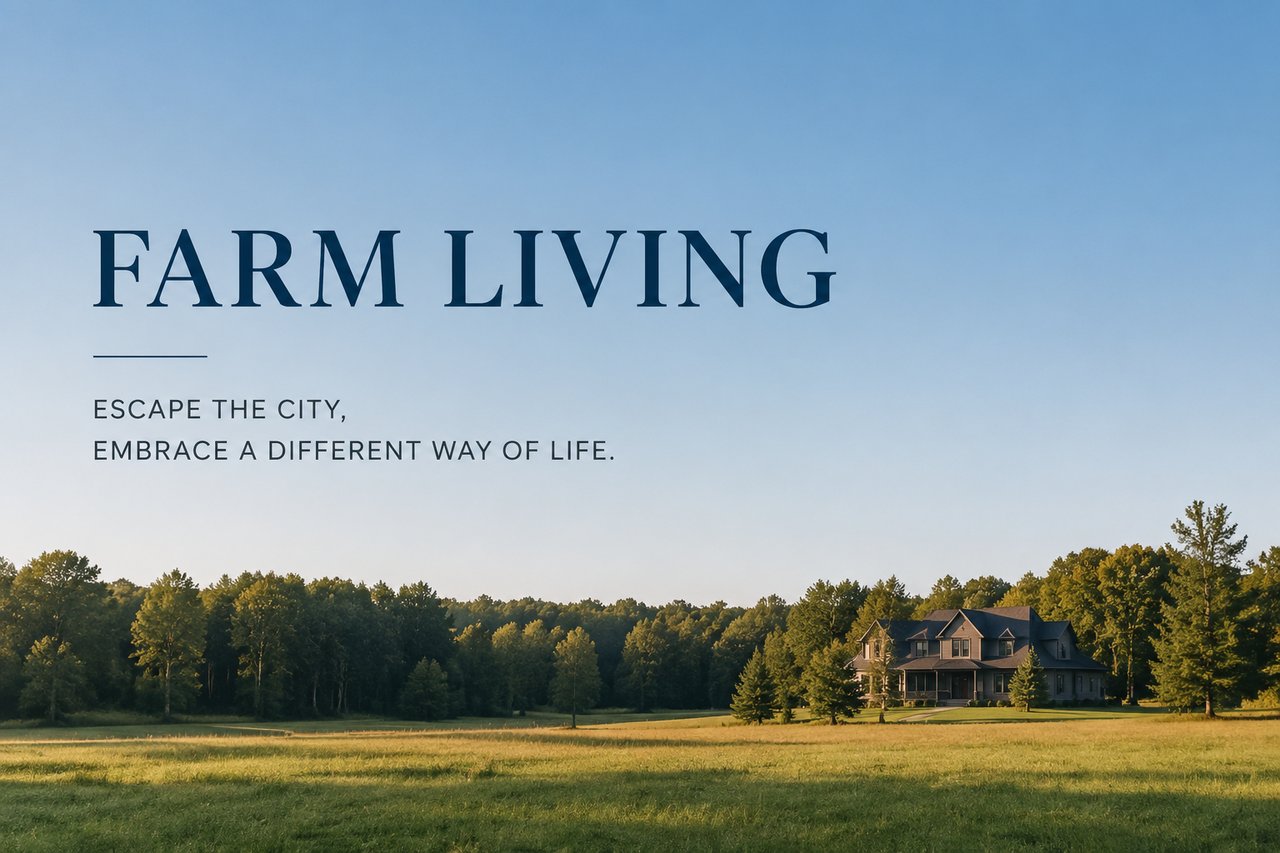
Imagine waking up every morning surrounded by mature trees, open fields, and endless skies. A weekend does not require a planned getaway because nature is already outside your door.
For some people, this is not an escape from life — it is a different way of living.
The Growing Appeal of Rural and Estate Living
The way people evaluate real estate has evolved.
While location, size, and finishes remain important factors, many buyers today are also considering a bigger question:
What kind of lifestyle do we want to create for ourselves and our families?
The pandemic accelerated this shift, but the trend goes beyond remote work. Many homeowners have realized that additional space, outdoor access, and privacy provide long-term value that cannot always be measured by square footage alone.
Large-acreage properties offer something increasingly rare in Southern Ontario: land.
As urban boundaries continue to expand and development increases, properties with significant acreage, mature natural features, and convenient locations are becoming more limited.
However, not all rural properties serve the same purpose. Understanding the differences between these property types is essential for buyers exploring country living.
Working Farm: A Lifestyle and a Business
A Working Farm is designed around agricultural production.
These properties typically have land that is actively used for farming operations, including crop production, livestock, orchards, vineyards, or other agricultural activities.
For owners, farming is often more than a lifestyle — it can be a business requiring significant knowledge, investment, and daily commitment.
A working farm may offer opportunities for:
- Agricultural income generation
- Long-term land ownership
- Family farming traditions
- Connection to the local food system
However, it also comes with responsibilities. Equipment, maintenance, regulations, seasonal cycles, and operational demands all play an important role.
For those passionate about agriculture, a working farm represents not just a home, but a way of life.
Hobby Farm: Creating Experiences and Memories
A Hobby Farm offers a different approach.
Rather than focusing primarily on commercial production, hobby farms are often purchased by families who want to enjoy the experience of rural living.
These properties may include:
- Vegetable gardens
- Orchards
- Small-scale livestock
- Horse facilities
- Outdoor recreational spaces
For many families, the attraction is not financial return — it is the opportunity to create a more meaningful daily environment.
Children can grow up with more space to explore. Families can spend weekends outdoors. Owners can enjoy the satisfaction of producing their own food or caring for animals.
A hobby farm combines residential living with a stronger connection to nature.
Country Estate: Privacy, Legacy, and Long-Term Value
A Country Estate represents another category entirely.
Unlike a traditional farm, the primary focus is often the land itself — its privacy, beauty, location, and potential.
A country estate typically features:
- Expansive acreage
- Mature trees and natural landscapes
- Private driveways
- A custom residence
- Recreational opportunities
- A sense of exclusivity
For many buyers, these properties are not simply places to live. They represent a long-term vision — a private retreat, a family gathering place, or a legacy asset that can be enjoyed for generations.
The value comes not only from the home, but from the uniqueness of the land.
A house can be renovated or rebuilt.
But a large parcel with mature forests, a desirable location, and natural character is much harder to replicate.
A Rare Example: The Lawson Estate
One example of this type of property is 960 Lawson Road — The Lawson Estate, located near Georgian Bay.
This exceptional property offers approximately 87 acres of private land, combining natural beauty, recreational opportunities, and long-term potential.
Its location provides a unique balance between peaceful country living and accessibility:
- Walking distance to Woodland Beach
- Minutes from Wasaga Beach
- Close proximity to Collingwood and Blue Mountain
This creates a four-season lifestyle that few properties can offer.
During the warmer months, residents can enjoy waterfront activities, boating, hiking, and outdoor recreation.
In the winter, Blue Mountain provides opportunities for skiing and winter adventures.
The property itself features mature maple and oak forests, private trails, open spaces, and approximately 31 acres of usable agricultural land.
While the existing residence provides comfortable family living, the land creates possibilities beyond a traditional home:
- A private family estate
- An equestrian property
- A personal retreat
- A multi-generational gathering place
The possibilities are shaped by the buyer’s vision.
The Value of Owning Land in a Changing Market
As cities continue to grow, large parcels of land in desirable locations become increasingly scarce.
For many buyers, acreage properties represent more than a lifestyle choice — they represent a form of long-term value preservation.
Land with unique characteristics cannot easily be duplicated.
A property with mature trees, privacy, proximity to nature, and access to nearby amenities offers something increasingly difficult to find in modern real estate:
space with meaning.
So, Is Farm Living an Escape?
The answer depends on what you are looking for.
For some, city living provides energy, convenience, and endless opportunities.
For others, owning a piece of land represents freedom, privacy, and a closer connection to nature.
Farm and estate properties are not simply alternatives to urban homes. They represent a different definition of success — one built around lifestyle, experiences, and the ability to create something that lasts.
The question is:
Would you choose the convenience of the city, or the opportunity to own a piece of land that you can truly call your own?