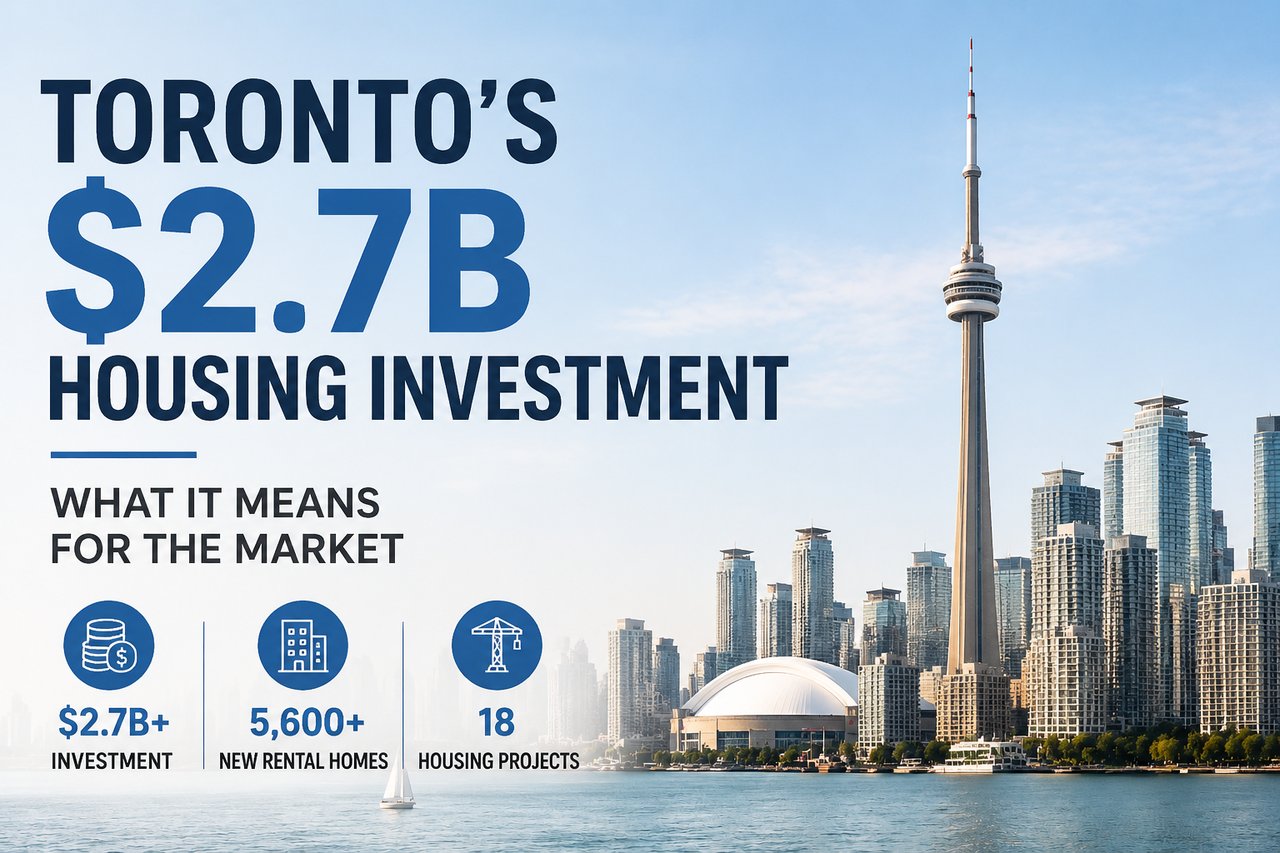
The Canadian government recently announced a major housing investment agreement with the City of Toronto, committing more than $2.7 billion over the next three years to support the development of 18 housing projects across the city.
The initiative is expected to create more than 5,600 new rental homes, including a significant number of affordable and supportive housing units.
The announcement immediately sparked discussion among homeowners, renters, investors, and industry professionals.
Many people are asking:
Will this increase in housing supply change Toronto’s real estate market?
Some are even wondering:
Will more housing supply eventually lead to lower home prices?
The reality is more complex. To understand the potential impact, we need to look at the bigger picture.
Addressing Toronto’s Long-Term Housing Supply Challenge
Over the past several years, one of Toronto’s biggest housing challenges has been the imbalance between population growth and housing supply.
Toronto has experienced strong population growth driven by immigration, employment opportunities, and continued demand for urban living.
However, new housing construction has struggled to keep pace with this growth, creating pressure across both the ownership and rental markets.
The rental market has been especially affected.
Many tenants have faced:
- Limited rental availability;
- Increasing competition for quality homes;
- Rising rental costs.
The new government-supported projects focus primarily on purpose-built rental housing, which means these properties are designed specifically for long-term rental use rather than individual ownership.
For renters, additional supply could eventually provide more options and help improve market balance.
Public Reaction: Support and Concerns
While many people welcome the increase in housing supply, the announcement has also generated different opinions.
One common concern is whether 5,600 homes will be enough to make a meaningful difference in a city as large as Toronto.
Compared with the overall size of the Toronto housing market and future population growth, this number represents an important step, but it is unlikely to completely solve the affordability challenge on its own.
Others have questioned why the focus is primarily on rental housing rather than helping more young Canadians achieve home ownership.
For many first-time buyers, affordability remains one of the biggest barriers, and increasing rental supply does not directly address the challenge of purchasing a home.
There are also concerns from some landlords and real estate investors about how increased purpose-built rental supply could affect the private rental market.
As more professionally managed rental buildings enter the market, private landlords may face greater competition for tenants.
What Does This Mean for Landlords?
For landlords, this policy represents a potential shift in the rental landscape.
In the past, many investors competed mainly with other individual property owners.
However, as more purpose-built rental developments are introduced, competition may increasingly come from professionally managed buildings offering:
- Modern amenities;
- On-site management;
- Newer construction;
- More predictable rental experiences.
This means successful rental investments in the future may require more than simply purchasing a property and waiting for appreciation.
Factors such as:
- Location;
- Property condition;
- Tenant demand;
- Rental positioning;
- Long-term market competitiveness;
will become increasingly important.
A well-selected property with strong fundamentals will continue to have advantages in a more competitive rental environment.
Will This Impact Toronto Home Prices?
In the short term, this investment is unlikely to create a sudden change in home prices.
Housing projects require significant time from announcement to completion.
The process typically involves:
- Planning approvals;
- Design;
- Construction;
- Final delivery.
Therefore, these 5,600 rental homes will not immediately change supply conditions in Toronto.
However, the long-term impact could be more meaningful.
This investment reflects a broader shift in housing policy: governments are increasingly focusing on increasing supply as a solution to affordability challenges.
More purpose-built rental housing could gradually change the structure of Toronto’s housing market by providing renters with more options and reducing pressure on certain segments of the market.
The Bigger Picture
Ultimately, real estate markets are shaped by three fundamental factors:
Supply, demand, and affordability.
The $2.7 billion investment represents an important step toward addressing Toronto’s housing shortage, but it is only one piece of a much larger puzzle.
The key questions moving forward will be:
- Can housing construction continue at a pace that matches population growth?
- Will new developments meet the needs of different types of households?
- How will interest rates, employment, and affordability influence buyer and renter behaviour?
Housing markets rarely change because of one single policy decision.
Instead, long-term trends are shaped by the combination of government policy, economic conditions, and market demand.
As Toronto continues to evolve, understanding these changes will be essential for buyers, sellers, landlords, and investors navigating the next phase of the real estate market.